Faceland — Fractional Marketing Leadership & System Stabilisation
Fractional marketing leadership during a period of transition, focused on stabilising operations, strengthening data foundations, and enabling sustainable growth in a regulated clinical environment.
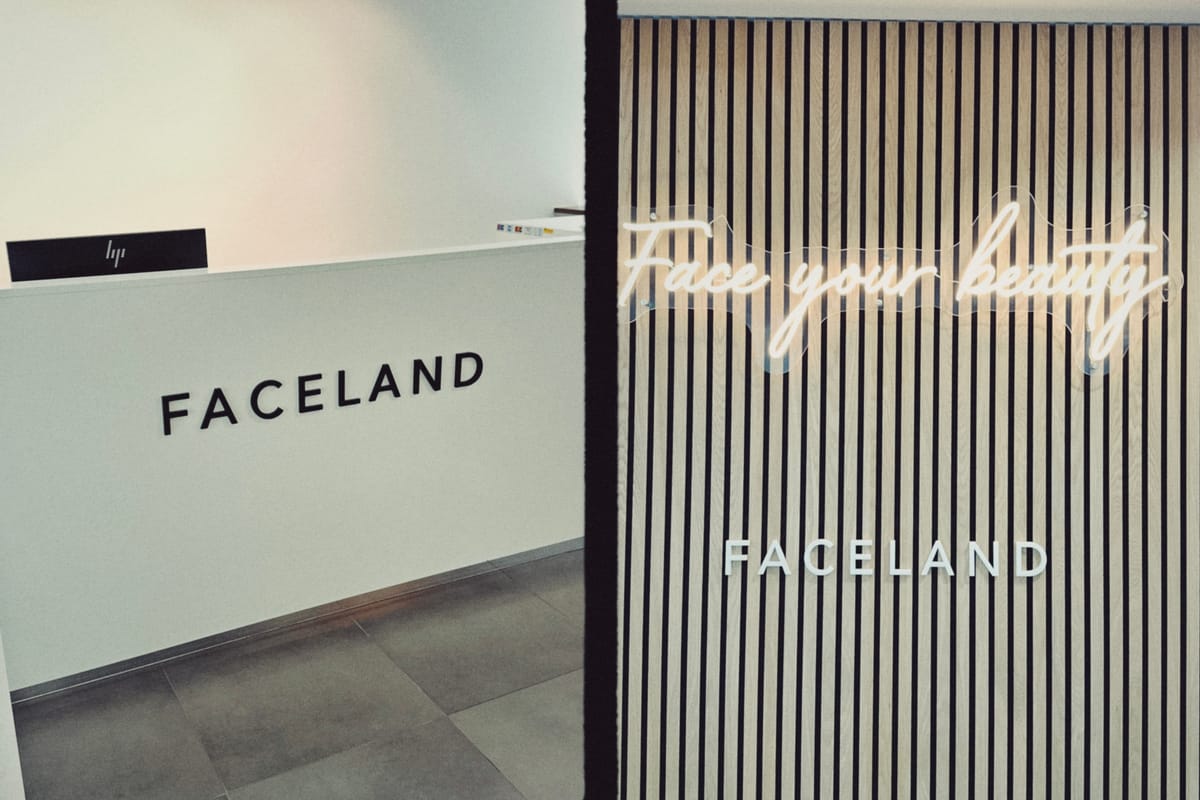
Completed Mandate · Fractional Marketing Executive · Healthcare / Regulated Clinical Services · Europe · 2025–2026
This project documents my work as a Fractional Marketing Executive supporting Faceland during a period of significant leadership transition and rapid international growth.
The mandate, which began in the summer of 2024 and concluded in March 2026, focused on stabilising marketing operations, onboarding a new permanent leadership team, and establishing a scalable framework for international performance and centralized media buying.
Context
- Company: Faceland Holding BV
- Industry: Healthcare / Medical Aesthetics (Clinic-based services)
- Geography: Netherlands (HQ), Germany, Belgium, Switzerland, and Italy
- Timeframe: Summer 2024 – March 2026
- Role: Fractional Marketing Executive & Strategic Coach
Evolution of the Scope
While the project began with a focus on system stabilisation and interim leadership, the scope evolved as the organization matured.
- Phase 1: Stabilisation & Coaching: Learning the business intricacies, coaching the existing team, and fixing the "data plumbing" to restore confidence in marketing spend.
- Phase 2: International Expansion: Streamlining communications and marketing efforts across Germany, Switzerland, Belgium, and Italy.
- Phase 3: Leadership Onboarding: Successfully identifying and onboarding the permanent leadership team—specifically the CMO (Ram Huigen) in late 2025 and the CDO (Ralph Remkes) in early 2026.
- Phase 4: Operational Professionalization: Designing the balance between central media buying and decentralized, local marketing execution within the group.
Key Successes & Project Learnings
The project concluded as a resounding success, with the organization demonstrating extreme flexibility and an appetite for modernizing their commercial engine. Key focus areas included:
- The Customer Lifecycle: Shifting the mindset from pure acquisition to a holistic view of the patient journey.
- Lead Generation Utility: Implementing robust lead gen frameworks that feed directly into clinical operations.
- Last-Mile Marketing: Focusing on the final touchpoints that drive business growth at the local clinic level.
- Global Media Partnerships: Re-evaluating and optimizing how the group collaborates with major international media houses to gain leverage.
The Handover (March 2026)
In March 2026, I officially handed over marketing and digital responsibilities to Ralph Remkes (CDO) and Ram Heuchen (CMO). The team is now perfectly positioned to drive the next phase of professionalization. I continue to support the team on an ad hoc coaching basis, ensuring the strategic momentum remains high.
Final Outcomes
- Successful Transition: Moved from fractional leadership to a fully-staffed, high-performing permanent executive team.
- International Framework: Established a working model for "Central vs. Local" marketing that supports growth in four European markets.
- Data-Driven Culture: Weekly performance discussions shifted from reactive "firefighting" to forward-looking strategic planning.
- Organizational Agility: The team now functions with a high degree of autonomy and a clear roadmap for international operational excellence.
Lessons Learned
What I would repeat
- Investing in People: The "coaching" element of the fractional role was just as important as the strategic one. Helping the team grow alongside the systems ensured the changes actually stuck.
- Neutral Leadership: Being an external fractional leader allowed me to bridge the gap between the board’s financial goals and the team's operational realities without internal bias.
What others can learn
For fast-growing clinical groups, the "Last Mile" is where the battle is won. Centralized strategy is vital, but if you don't empower local clinics with decentralized marketing tools and streamlined communication, you lose the trust of the local patient base.
Frequently Asked Questions
- What is the primary value of a Fractional Executive during a leadership transition? Stability and continuity. When a CMO or senior leader departs, there is a risk of strategic drift and team anxiety. I step in to provide immediate senior leadership, ensuring that international growth doesn't stall while the board searches for a permanent successor. I don't just "keep the lights on"; I stabilize the operations so the incoming CMO inherits a high-performing engine rather than a list of problems.
- How do you handle marketing compliance in a regulated healthcare environment like the EU? Compliance is a non-negotiable foundation, not an afterthought. In clinical services, this means balancing aggressive performance marketing with strict adherence to healthcare advertising laws and GDPR. My approach is to build "compliance-by-design" into the data and CRM infrastructure, ensuring that patient consent and communication are both legally sound and commercially effective.
- Why prioritize data and reporting foundations over tactical campaign optimization? Tactical optimization is useless if it’s based on fragmented or unreliable data. By rebuilding the BI (Business Intelligence) framework first, we restore executive confidence in the numbers. Once the data ownership is centralized and the reporting is decision-ready, every dollar spent on performance marketing becomes significantly more efficient and measurable.
- How does the "Acquisition vs. Retention" balance shift in a clinical growth model? In high-growth clinic groups, the cost of acquisition (CAC) is often high. Sustainable profitability is found in the "Lifetime Value" (LTV)—getting patients to return for follow-up treatments and long-term care. My focus at Faceland was to shift the strategy toward retention-led growth, implementing CRM and lifecycle communication that treats the patient relationship as a long-term asset.
- How do you collaborate with existing internal teams and external vendors in an interim role? I act as a "translator" and a "sparring partner." I align the internal team’s specialized skills with the executive board's financial goals. For external vendors, I provide the clear mandate and accountability they often lack during leadership gaps. The goal is to remove technical and political blockers so everyone can return to high-velocity execution.
- How did the role change when the new CMO and CDO joined? My role shifted from "doing and directing" to "onboarding and coaching." The goal was to ensure Ralph and Ram had a clear view of the historical data, the technical landscape, and the strategic "why" behind our international efforts, allowing them to hit the ground running from day one.
- What was the biggest challenge in the international expansion? Balancing the efficiency of central media buying with the necessity of localized content and tone. What works in the Netherlands doesn't always translate to Switzerland or Italy; creating a framework that allowed for "centralized scale with decentralized soul" was key.