Swiss Oral Health Day 2025 – A Special Experience in Bern
Recap of the Swiss Oral Health Day 2025 in Bern: insights from my keynote on social media opportunities and risks for dental practices, and reflections on how the industry continues to evolve after 50 years.
Celebrating 50 Years of the Swiss Oral Health Day
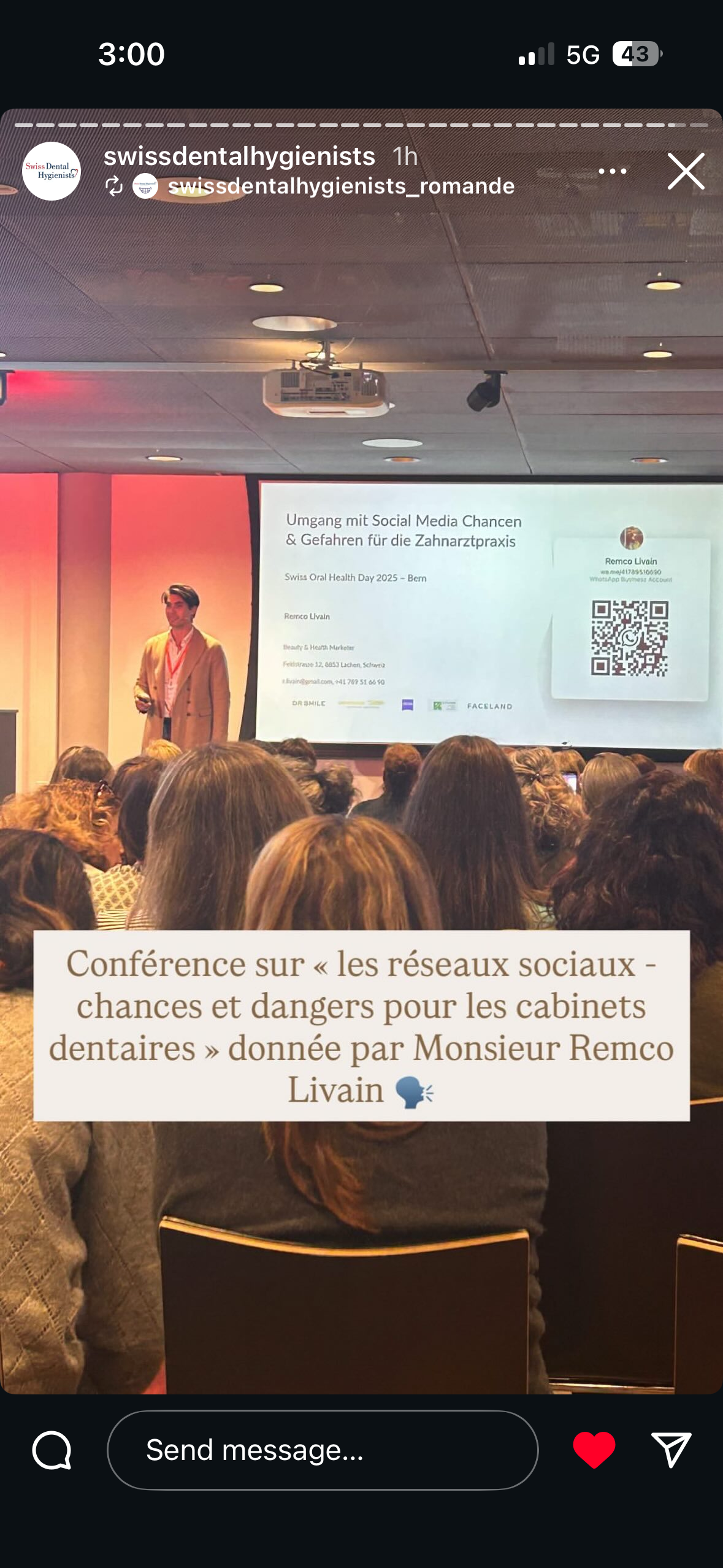
Yesterday I had the opportunity to speak at the Swiss Oral Health Day 2025 in Bern — and honestly, it was one of those moments that makes you pause for a second and realise how special this industry really is.
This year marked the 50th anniversary of the event.
Fifty years.
Half a century of professionals coming together to learn, share, discuss, and push dental health forward in Switzerland. That alone says everything about the importance of this industry — and about the people who hold it up.
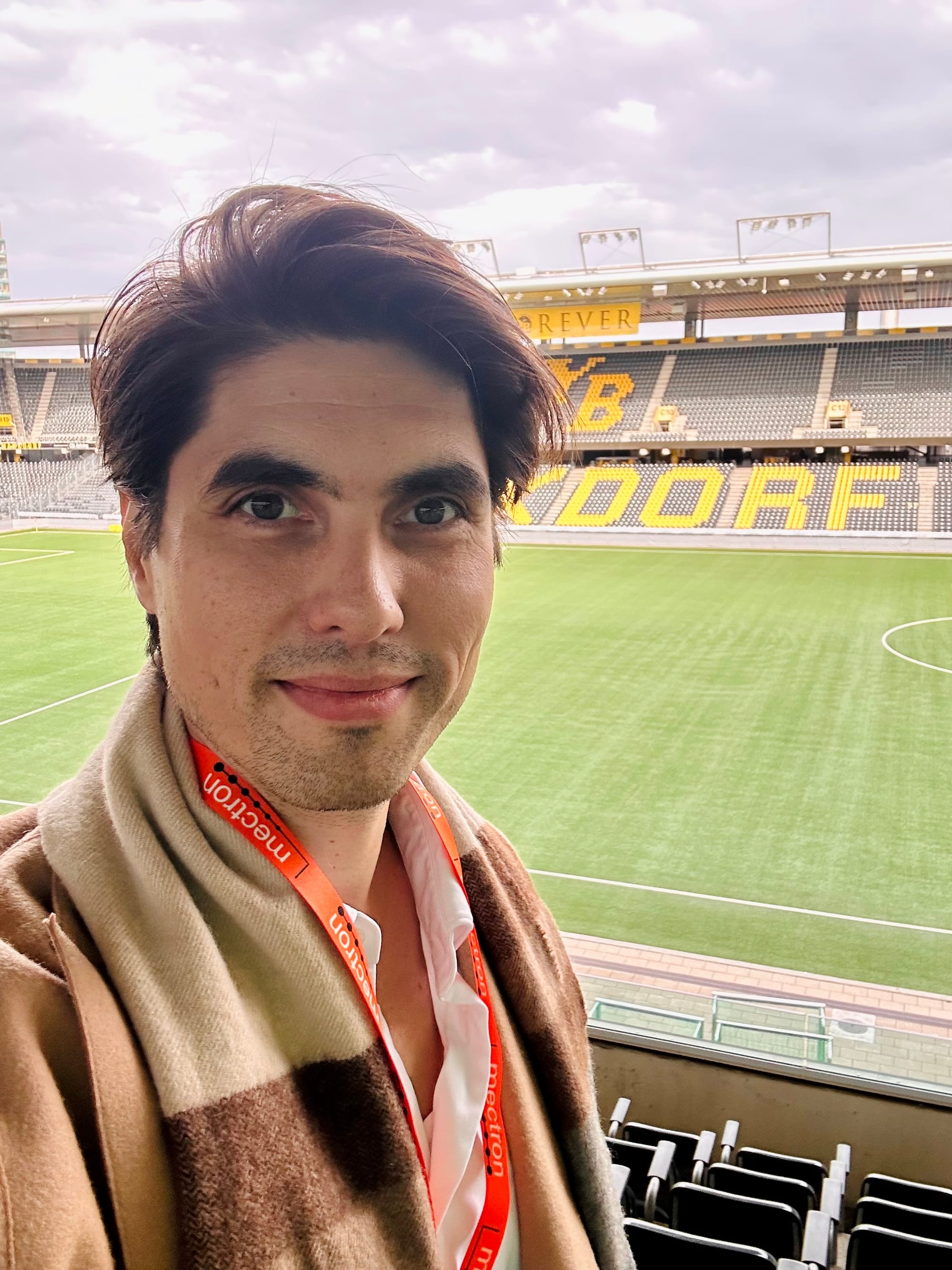
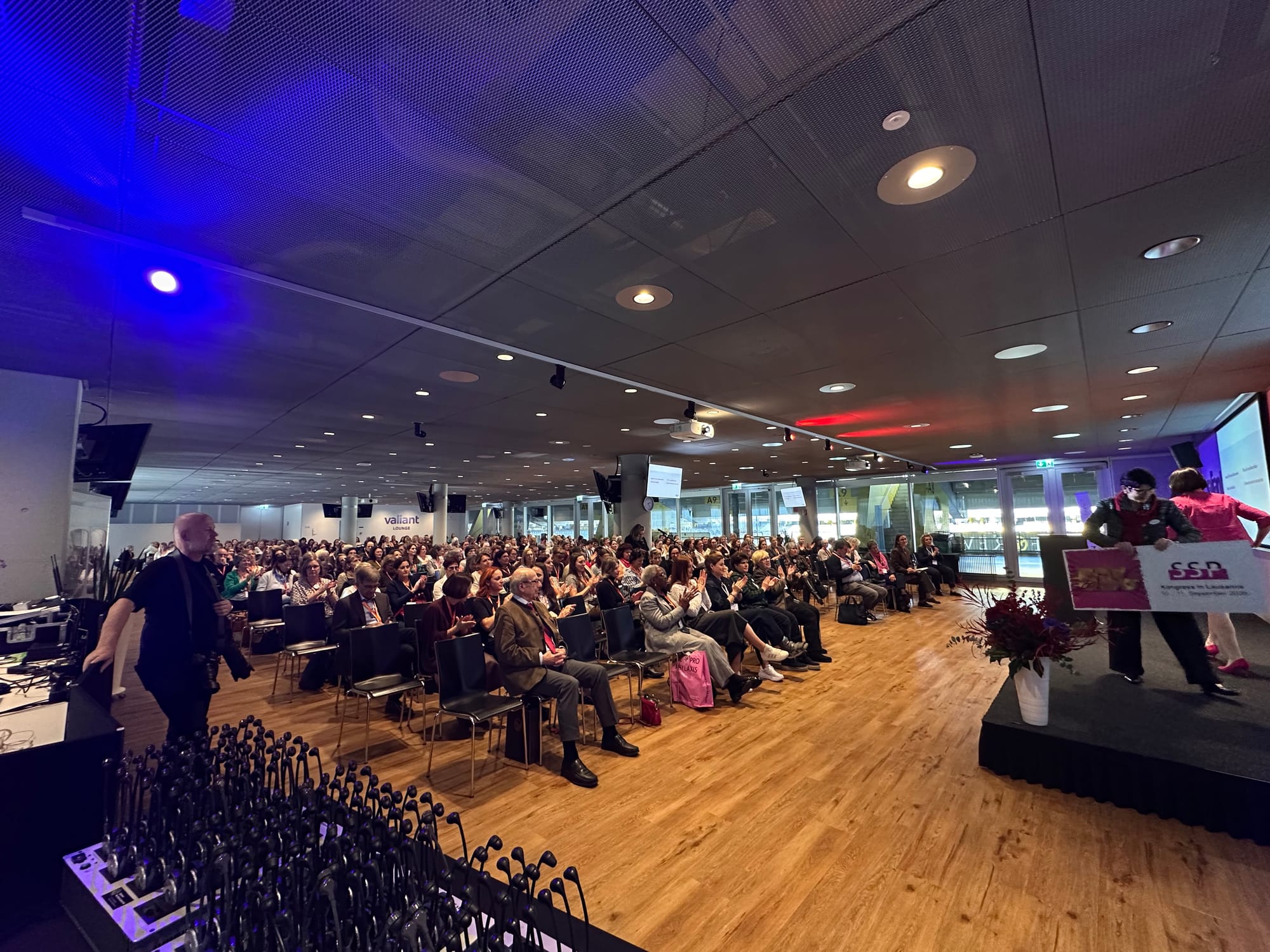

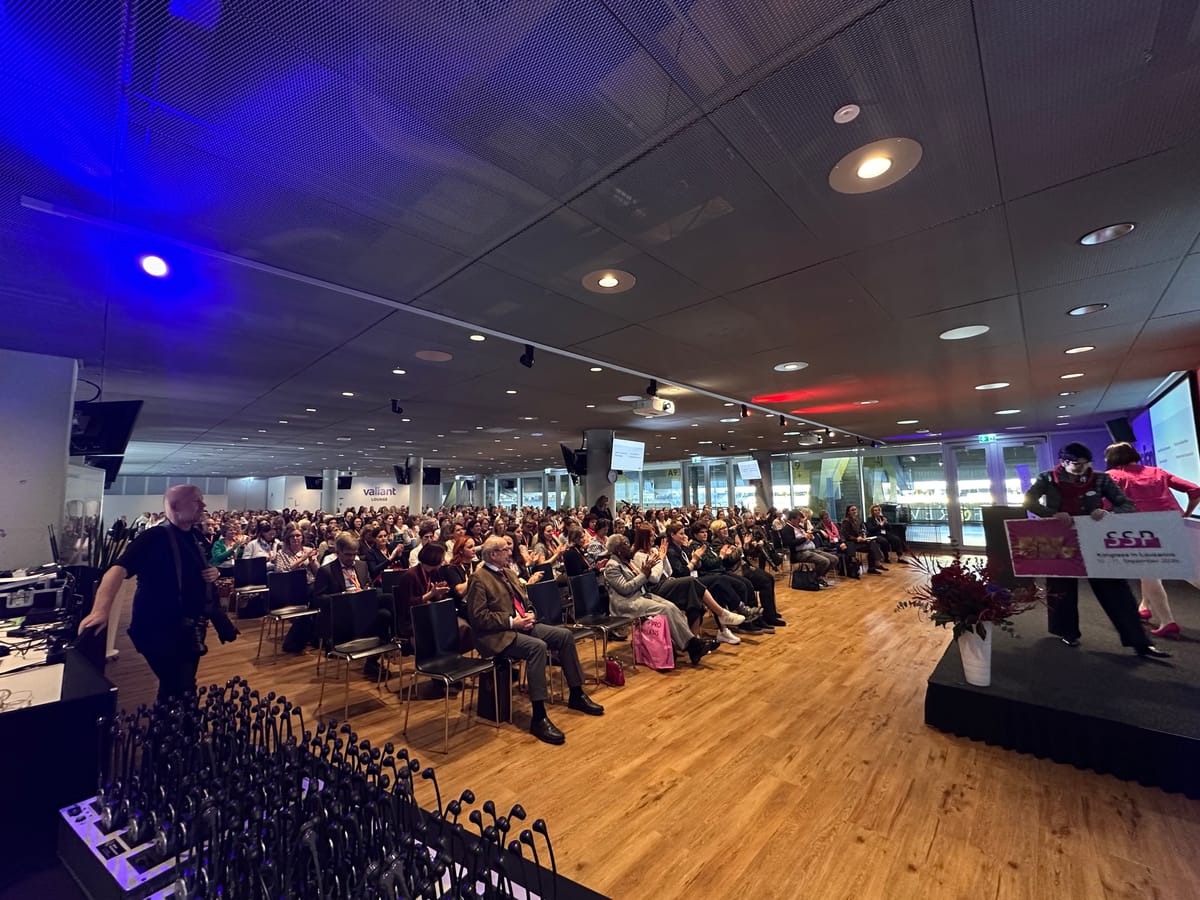
Impressions of the Swiss Oral Health Day in Bern, November 14 2025
And the venue couldn’t have been better: the Young Boys football stadium, in the Champions Lounge.
Walking into a big sports arena early in the morning, with a tiny tractor quietly preparing the pitch while 500 people settled in to talk about dental health — that contrast was amazing. It made the whole day feel unique, fresh, and full of energy.
Why Events Like This Matter in the Dental Industry
Continuous Education as a Standard in Swiss Dentistry
These kinds of events are not only a chance to connect with peers; they are part of the backbone of the profession.
In Switzerland, if you’re a dentist and own a practice, you’re expected to complete around 80 hours of continued training every year — through events, workshops, and hands-on courses.
It’s something I’ve always admired: dentistry treats lifelong learning as a standard, not an exception.
And I genuinely believe many other industries could learn from this mindset.
My Talk: Opportunities and Risks of Social Media for Dental Practices
Why This Topic Matters More Than Ever
For this event, I spoke about a topic I’ve been deeply involved with:
how dental practices can use social media professionally — and what the risks are when they don’t.
In many clinics, social media still works like this:
It gets handed to the receptionist, or whoever “has a few minutes,” with the instruction to “just post something.”
No strategy.
No context.
No understanding of the impact.
But social media is no longer just entertainment.
It has become part of people’s daily navigation — quite literally. Patients use it to:
- look up treatments,
- check opening hours around the holidays,
- find directions to the clinic,
- get a sense of the atmosphere and the team,
- and decide whether they trust a clinic enough to book an appointment.
Why Social Media Is a Strategic Tool — Not a Task
When used well, social media becomes:
- a communication channel,
- an information platform,
- an impression-building tool,
- and a way to connect with potential patients long before they pick up the phone.
For clinics that embrace it strategically, it can lead to stronger trust, better clarity, and even steady new patient flow.
But the opposite is also true: without structure, it becomes chaotic, inconsistent, and ineffective.
That’s why I enjoyed sharing insights, best practices, and real examples from my work with clinics and brands.
Reflections on Speaking at Industry Events
I don’t do a huge number of speaking engagements.
This was only my second dental conference appearance this year, after the SSO Congress in Lugano (Schweizerische Zahnärzte-Gesellschaft SSO) this summer.
But both times, I left with the same feeling:
- the audience is open, curious, and willing to learn,
- the events are well organised,
- and there’s a genuine desire to improve the way dental clinics communicate and operate.
I’m grateful for the opportunity to speak, share ideas, and help the industry move forward — even if just a little bit.
Looking Ahead: Why I’m Writing This
Part of why I’m sharing this recap is personal — I like capturing these moments.
But it’s also for anyone who wasn’t there, and for people interested in how I work, what I observe, and what I contribute to events like this.
Days like the Swiss Oral Health Day remind me why I enjoy my work so much:
It’s the mix of human connection, strategy, and the chance to enable teams and leaders to do things differently.
If You Were at the Event — Let’s Stay in Touch
I had some great conversations yesterday, and I genuinely hope to continue a few of them.
If you were in the audience and something we discussed resonated with you — or if you’d like to explore how your clinic or organisation could improve its digital presence — feel free to reach out.
Open to Conversations, Collaborations, and Future Speaking Engagements
As a fractional executive in marketing & sales, I regularly help clinics and healthcare organisations:
- build their marketing engines,
- improve their communication,
- structure their teams,
- and develop a clear digital presence.
If you’d like to discuss any of this — whether casually or with a concrete goal in mind — I’d be very happy to connect.
📩 Contact: r.livain@icloud.com
🌐 Website: https://www.livain.com
💬 Or reach out on Social Media (such as Threads: here is my profile) — I’m always open to a conversation.
Frequently Asked Questions
1. Why is social media strategy particularly critical for dental and medical practices? In healthcare, social media isn't just about "likes"; it’s about establishing trust before a patient ever enters the clinic. Patients use these platforms to vet the atmosphere, the team, and the expertise of a practice. Without a strategy, a clinic risks projecting a disorganized image that can actually deter potential patients, even if the clinical care itself is excellent.
2. Is it enough to have a receptionist manage the clinic’s social media in their spare time? While a team member can certainly manage the day-to-day posting, the strategy should be set at an executive level. "Just posting something" often leads to inconsistent messaging and missed opportunities. I help clinics move from "random posting" to a structured system where social media serves as a reliable channel for information, trust-building, and patient acquisition.
3. What are the biggest risks of an unmanaged or "casual" digital presence for a clinic? The primary risk is a "trust gap." If a patient finds outdated holiday hours, broken links, or low-quality content, they subconsciously associate that lack of attention to detail with the clinical care. Furthermore, failing to use social media as a navigation and information tool means losing patients to competitors who provide a more seamless digital experience.
4. How does the Swiss requirement for 80 hours of annual continued education impact the industry? It sets a high bar for excellence. This culture of lifelong learning means that Swiss dental professionals are exceptionally open to new methodologies—not just in clinical work, but in business and communication. My role is to bridge that gap, bringing the same level of professional rigor to their marketing that they bring to their dental surgery.
5. Do you offer social media workshops specifically for healthcare teams? Yes. Following events like the Swiss Oral Health Day, I often work with clinics to conduct tailored workshops. We focus on creating actionable success factors: how to structure the team, what content actually drives patient trust, and how to manage a professional digital presence without it becoming a full-time burden for the staff.